How Schuyler Farms eliminated manual monitoring and saved 20+ hours a month.
A Norfolk County farm replaces clipboard-based data collection with real-time sensor monitoring across multiple storage facilities.
- Location
- Norfolk County, ON
- Established 1980
- Operation
- 50 full-time
- 400 seasonal staff
- Focus
- Sustainable agriculture
- Apples, cherries, grains, oilseeds
Clipboards, missed checks, and product at risk.
Located in the heart of Norfolk County, Schuyler Farms is a family-run operation producing apples, sour cherries, grains, and oilseeds.
As a mid-sized farm with multiple sites, monitoring environmental conditions, like temperature, humidity, air quality, and water pressure, was essential to ensure product quality and reduce waste and spoilage.
But the monitoring process the Schuyler team was using was outdated. Staff walked through facilities with clipboards, manually logging data at each station. These notes never made it into a system where they could be analyzed, and there was no formal process documentation. This critical knowledge simply lived in people's heads. If someone was away or sick, workflows fell apart.
Relying on a few “heroes” was no longer sustainable for the business. Team members were burning out, and the scaling farm's growing operational complexity demanded a smarter approach.
The team tested off-the-shelf sensor solutions, but they didn't meet the farm's needs. Alerts went to everyone, with no way to assign responsibilities or prioritize actions. Data was fragmented, and decision-making suffered. The software was either too simple, measuring only one condition and lacking integration capabilities, or over-engineered, expensive, and complicated to set up.
Schuyler Farms needed a solution designed to support its growing agricultural operations: multiple easy-to-install sensors that integrated seamlessly across storage facilities. They didn't want cluttered dashboards or generic notifications. They wanted data routed to the right people, clearly, immediately, and with the context to take informed action.
From manual rounds to real-time visibility.
Clipboard rounds
- Readings logged by hand at each station
- Data never reached a system that could analyse or alert
- Process knowledge tied to individuals, not the organization
- Problems discovered after product was already at risk
- Off-the-shelf tools fragmented across disconnected systems
Storage Sentry
- 125+ sensors reporting continuously, no walkthroughs required
- Real-time alerts routed to the right person, with context
- Historical data available for traceability and audits
- 20+ hours of monthly labour returned to higher-value work
- One platform, managed in-house, built for the way they work
Built around how the farm actually works.
The first step was to meet with team members across the farm to understand their needs, what had gone wrong with past solutions, and what a successful system would look like.
The next step was to source the right sensors for the job. With hundreds of options on the market of varying reliability and performance, this was no simple task. The sensors needed to be durable, waterproof, and designed for demanding agricultural environments while delivering reliable, accurate data.
Dozens of models were tested to determine the best sensor for each application, ultimately delivering a curated set of high-performance options tailored to Schuyler's needs. Sensors were installed incrementally throughout the farm's facilities, an approach that allowed each device to be tested, its data output analyzed, and its operation fine-tuned.
With the sensors in place, a custom web application called Storage Sentry was developed to analyze incoming data and send real-time alerts to the right team members. This targeted alerting system became one of the platform's most valuable features for Schuyler Farms. Unlike previous solutions that sent out alerts to the entire team, Storage Sentry only notified those who needed to take action, cutting out the noise and saving time.
Alerts fell into two key categories:
Environmental alerts
Temperature or humidity falling outside optimal ranges.
Sensor performance alerts
Low battery, lost signal, or inactivity.
These two types of alerts helped the team stay proactive and ensured the system itself remained operational as well.
The system expanded to include more sophisticated sensors, such as multi-node units in cooling areas to ensure even airflow and ambient readings.
The Schuyler team was trained on how to use the platform, from installation and troubleshooting to adding new sensors, empowering them to manage the system independently and scale it as needed.
Continuous visibility. Faster response. Better decisions.
Implementing Storage Sentry has helped Schuyler Farms boost efficiency and streamline operations. With over 125 sensors installed across their facilities, the system monitors key environmental factors like temperature, humidity, and air pressure, delivering real-time insights and targeted alerts.
The farm now saves more than 20 hours a month by eliminating manual data collection. Instead of relying on team members to log readings with clipboards, staff can access data and notifications through a web app anytime, anywhere. Now that the team is trained on the platform, they can manage the system in-house, adding new sensors, updating names and locations, and responding to alerts quickly.
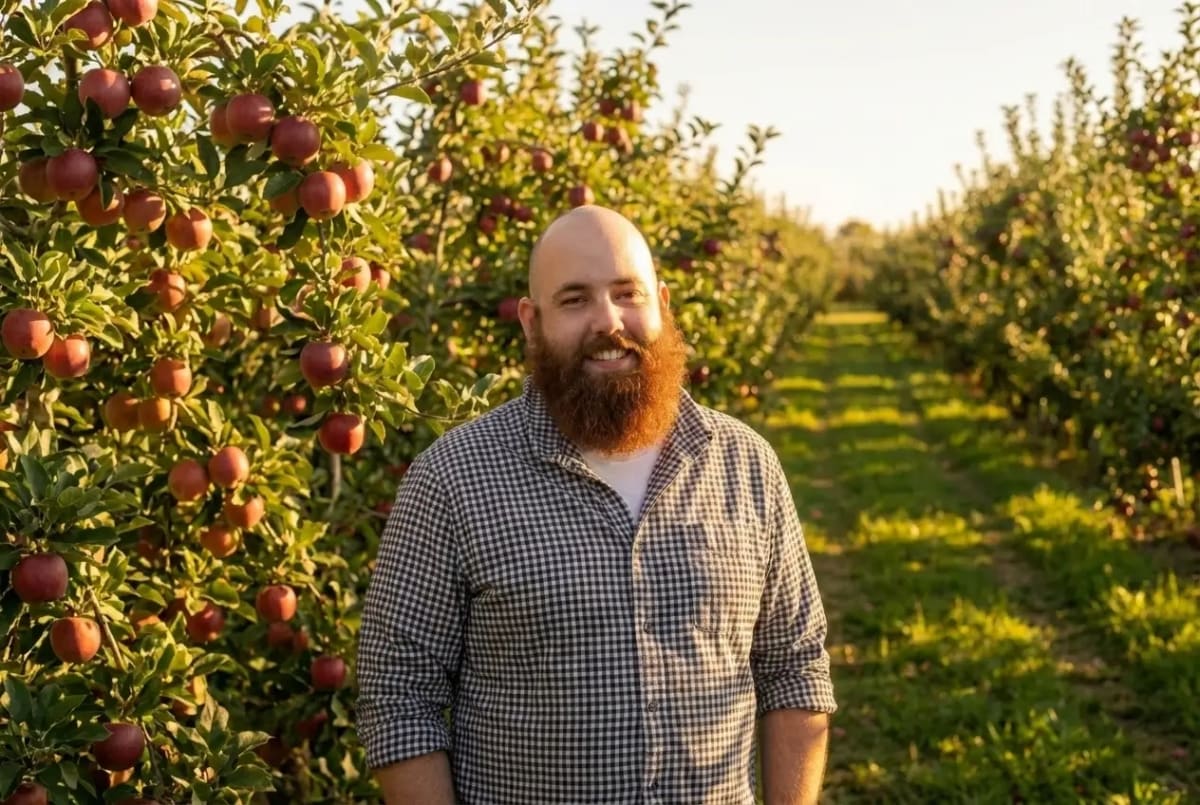
“Storage Sentry pushes decision-making to the right people, faster. Instead of alerts going to me and slowing things down, they now go directly to whoever needs to act, with clear context and instructions. No interpretation needed; just here's the issue, here's where it is. Go.”
Storage Sentry has become a reliable second set of eyes on the farm. Alerts are specific and actionable, ensuring the right person responds at the right time. This not only improves daily operations but also reduces stress and increases confidence across the team.
The system also supports quality control. If a batch of apples spoils, the team can review historical sensor data to identify whether it happened on-site or in transit. This kind of traceability reduces liability and helps with risk mitigation.
Most importantly, Storage Sentry supports better product outcomes. With reliable, high-quality sensors and smarter alerting, the farm can maintain ideal storage conditions and improve product longevity.
Looking ahead, Schuyler Farms plans to use the data collected to optimize production. By analyzing trends in cooling times, temperature, and fruit firmness, they aim to maintain quality while reducing energy use and costs to help improve long-term profitability.
“Storage Sentry is designed with farmers, for farmers, and it's a solution that just works. Setting up sensors isn't the hard part—it's building the logic, connections, and user-friendly interface. That's where it adds real value, both for us and the industry.”
Originally designed as a custom solution for Schuyler Farms, Storage Sentry has shown clear potential to serve the broader agriculture industry, helping farms monitor their operations more efficiently and make data-informed decisions with confidence.
Ready to protect your operation?
Start with a free facility evaluation.
Tell us about your operation and we'll schedule a call to assess your monitoring needs, recommend the right sensors, and walk you through the platform. No pressure, no obligation.
Your information is kept confidential and will never be shared.