Post-Harvest Grain Storage Best Practices for Ontario Farms
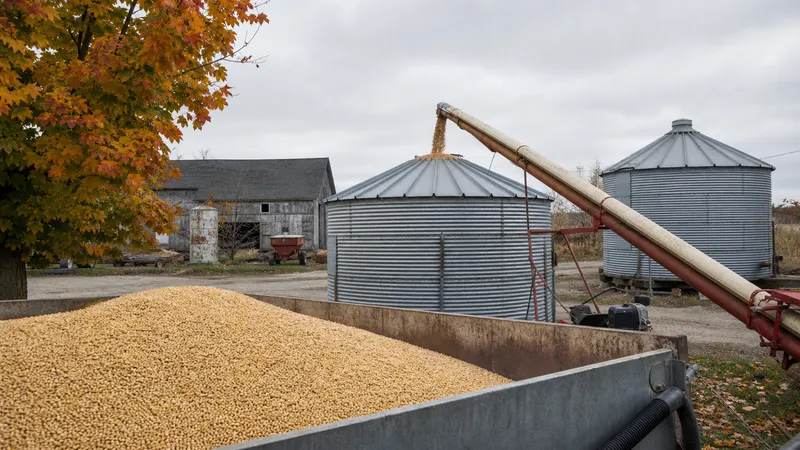
Ontario grain storage is not prairie grain storage with different dates. The harvest comes in wetter, the winter never gets aggressive enough to do the cooling work for you, and the insects in the bin do not get killed off the way they do at minus thirty. Operations that lift their plan straight from a Saskatchewan guide tend to learn this in March or April, when the bin starts to heat and the buyer starts asking questions.
This article is for Ontario farmers storing corn, soybeans, and winter wheat on farm. It covers Ontario-specific moisture targets, why cooling here is a patient game, how to decide between firing the dryer and running aeration, and the pest and mould pressures that hit harder than they do out west. OMAFRA guidance is the backbone, with Canadian Grain Commission targets layered in.
The biology is the same in either province. What changes in Ontario is how often the weather will help you, and how much margin you have to work with. Both are less. That is why Ontario storage plans should be read alongside moisture and temperature monitoring for grain, early hot spot detection, and how spoilage spreads in stored grain.
The Ontario harvest problem starts with moisture
Corn off the field in southern and central Ontario commonly comes in well above safe storage moisture, often in the 18 to 25 percent range depending on hybrid and how late the harvest runs. Soybeans can come off either too wet for the bin or, in a dry fall, too brittle for handling. Winter wheat harvested in July generally lands closer to target but can pick up moisture quickly if storms run through standing crop.
Three numbers matter, and it helps to keep them separate: the elevator's straight grade moisture, the safe long-term storage moisture, and the buyer's accepted moisture under contract. The targets below are long-term storage values from OMAFRA and CGC. Tighter is better if you are holding into late spring or summer.
Corn. Plan for roughly 15 percent moisture or below for storage through winter, with 14 percent preferred if you are holding into warmer months. Above 15.5 percent, the bin needs to either move quickly or get dried. Uniform drying matters as much as the average. A bin that averages 15 percent with pockets at 17 will heat before a uniform bin at 15.5.
Soybeans. Target 13 percent moisture for general storage and 12 percent for longer holds. Soybeans bruise and crack when handled too dry, so the practical band is narrow. Beans coming off above 14 percent in a humid fall should be dried before binning rather than relying on aeration to pull them down later.
Winter wheat. Generally safe at or below 14.5 percent, with 13.5 percent preferred for holds past spring. Soft red and soft white winter wheat are typically binned after a July harvest and need to be cooled before August and September warm spells push bin temperatures up.
An Ontario bin rarely gets the prairie advantage of binning grain that is already cool and dry. You typically start with grain that is at least somewhat damp and at least somewhat warm, and the storage plan has to bring both numbers down before respiration begins to feed itself.
Dryer versus aeration: when each makes sense
Most Ontario operations have both a dryer and aeration fans available. The judgment call is which one to use for a given parcel of grain.
A dryer is the right answer when the moisture removal needed is large, the harvest window is tight, or outside conditions will not give you the cool dry air aeration depends on. Corn coming off at 20 percent into a fall still running 18°C and 80 percent relative humidity is not getting to safe storage moisture through aeration. It needs heat.
Aeration is the right answer when the grain is within a few points of target and outside conditions actually give you drying potential. The variable that matters is not just temperature but the equilibrium relative humidity of the outside air. Cool damp air can re-wet grain that was already dry enough, which is why OMAFRA guidance focuses on running fans when ambient RH is low enough to pull moisture out rather than push it in.
A reasonable rule of thumb on Ontario bins: if the grain is more than two points above storage target, plan to dry. If it is one to two points above and you have a clear stretch of cool dry weather forecast, aeration drying can carry it the rest of the way. If it is at or below target, aeration is about temperature management, not moisture removal.
The most expensive mistake is binning marginal grain at 16 or 17 percent and assuming the fan will fix it later. By the time fall conditions give you good drying air, respiration in the warmer pockets is already offsetting what the fan can pull out.
Cooling in Ontario is patient work
Prairie storage benefits from a long stretch of cold dry winter. Ontario winters are interrupted: cold weeks, then a January thaw, then another cold stretch. Bin grain in southern Ontario rarely sees the same deep cold, and aeration windows are shorter and less reliable.
Ontario operators have to use the cool windows they get more deliberately. Cool dry nights in late October and early November are often the best aeration window of the year: the air is dry and grain is still warm enough that the temperature differential drives good airflow through the mass. Waiting for January cold to do the cooling work means moisture migration has already started.
A staged target sequence works for most Ontario operations:
First stage, fall post-harvest. Take the initial cooling pass within the first three to four weeks of binning, while outside air is reliably cooler than freshly stored grain. This is the easiest step of the Ontario storage year and the one with the shortest window before warm humid spells return.
Second stage, early winter. Push toward 5 to 10°C through November and December as cool nights allow. Grain may not cool uniformly, so the bin average matters less than whether any sensor is lagging the others.
Third stage, winter. Maintain whatever you have got. Resist the urge to run the fan during a January thaw: warm humid air pulled through cold grain causes condensation at the top of the bin.
Fourth stage, spring transition. This is the highest-risk window of the Ontario storage year. Outside air warms faster than the grain mass and the temperature differential reverses direction. Tighten alert thresholds and check bins more often than during winter.
Insect pressure is higher in Ontario
Stored grain insects do not survive prairie winters in significant numbers outside heated buildings. In Ontario, they do, in the bin and in the surrounding equipment. Rusty grain beetle, red flour beetle, and saw-toothed grain beetle populations carry over more readily, and the longer warm shoulder seasons give them more active weeks per year.
The practical consequence is that empty bin sanitation matters more here than prairie guidance suggests. Cleaning out residue grain, brushing down walls and aeration ducts, and treating the bin before refilling are routine steps, not optional ones. Temperature monitoring helps too: insect respiration adds heat the same way mould does, and a slowly warming pocket can flag insect activity even when moisture looks fine.
Mould risk in a humid Ontario fall
The Ontario corn crop carries field Fusarium into the bin in any wet growing season, and in DON years that load is already at or near downgrade thresholds before storage begins. Storage moulds do not produce DON, but a bin that holds damp corn through a slow cooling window gives field Fusarium additional weeks to express what it already has, while Aspergillus and Penicillium layer on their own contribution.
Top-layer condensation is the specific Ontario failure mode. Warm grain binned in October, a cold snap in November, and the temperature gradient pushes moisture up through the mass to condense against the cold roof and the cold top metre of grain. By December the top centre is wetter than the rest of the bin even though nothing went in wet. This is where most Ontario corn problems start.
A practical monitoring schedule for corn through an Ontario winter: check sensors weekly through fall, twice weekly through any January thaw, and daily once the spring temperature reversal begins in March. Top-centre sensors are the ones that matter. A degree of unexplained warming there in February is worth more attention than two degrees of warming in the side wall, because the top centre is where condensation and respiration both concentrate.
The Ontario storage year asks the operator to make more decisions than the prairie one does: more dryer-versus-aeration calls, more shoulder-season aeration windows to catch, more spring-transition vigilance. None of those decisions are hard if the bin data is in front of you. They are nearly impossible if the only data you have is a probe reading from the last time someone climbed the ladder.
Storage Sentry is a wireless monitoring platform purpose-built for Canadian agricultural operations. We help Ontario grain farmers track temperature and moisture across their bins with continuous wireless sensors, threshold alerts, and trend charts you can check from the cab or the kitchen. Learn how Storage Sentry can help.
References
-
Ontario Ministry of Agriculture, Food and Rural Affairs. "Grain Storage." omafra.gov.on.ca
-
Canadian Grain Commission. "Storing Grain on the Farm." grainscanada.gc.ca
-
Canadian Grain Commission. "Dry Grain to Safe Moisture Content." grainscanada.gc.ca
-
Canadian Grain Commission. "Protect Stored Grain from Insects." grainscanada.gc.ca
-
Ontario Ministry of Agriculture, Food and Rural Affairs. "Field Crop Protection." omafra.gov.on.ca