One Dashboard, Multiple Facilities: How Remote Monitoring Scales With Your Operation
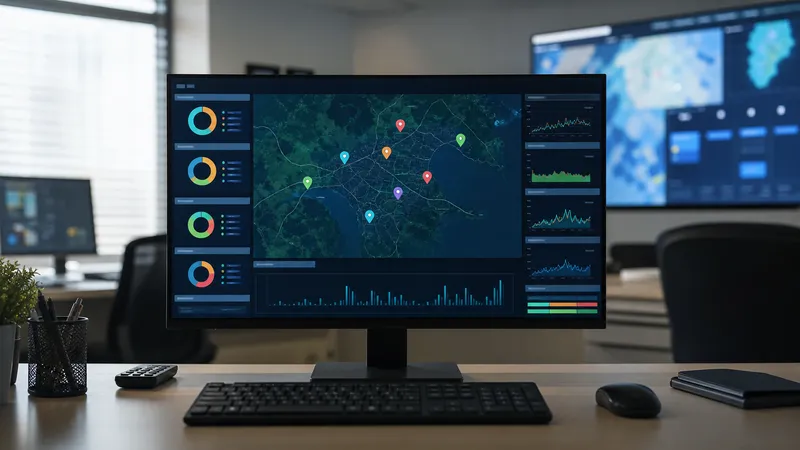
If you run more than one facility, you already know the problem. Each site has its own staff, its own equipment, its own quirks, and its own way of telling you when something is going wrong. Usually that way is a phone call, often at a bad time, often after the problem has been going for hours.
This article is for operators of multi-site businesses: regional cold storage chains, multi-location packers, distribution networks, farm operations with several yards, and processors with satellite facilities. It covers the operational case for centralized monitoring, what good multi-site visibility actually looks like, and how to roll it out without turning the project into its own full-time job. For the economic lens, compare it with farm monitoring ROI at different operation sizes and manual temperature logs vs automated monitoring.
The short version: once you stop relying on each site to notice and report its own problems, you can run more facilities with the same overhead, up to the point your response workflow can support. The dashboard is not the point. The point is how the dashboard changes what your people spend their time on, and whether the right process is in place behind it.
The hidden tax of running sites in isolation
Most multi-site operations grow one facility at a time. Each new site brings its own logbooks, its own thermometers on the wall, its own person who walks through at the start of the shift and writes things down. That works fine when you have one or two locations. For many operators it often starts to break down around three sites, and by five or six it can become a real operational liability, depending on the complexity of each facility and how much variation exists between them.
A few patterns tend to show up.
You only learn about problems when someone calls. A compressor that started running long at 2 a.m. is not on your radar until the morning crew arrives and notices the room is warm. By then you are dealing with the consequences instead of the cause.
There is no consolidated view. Each site's logs live on that site. Nobody can look at all of them at once and say, "the cold storage in the east region has been creeping up over the last two weeks." That kind of pattern requires data that sits in one place.
Regional managers are blind at night and on weekends. When the facility is closed, nobody is watching. If a freezer fails on Saturday evening, you find out Monday morning, which in cold storage is often too late to save the product inside.
You cannot compare sites to each other. Is the Brandon facility actually running tighter than Winnipeg, or does it just feel that way because they call you less? Without consistent data, the answer is whatever the loudest manager says it is.
The cost of all of this is real, but it shows up as labour and product losses spread across the year, not as a single line item. That makes it easy to ignore and expensive to fix.
What good multi-site monitoring actually includes
The term "remote monitoring" gets applied to anything from a $40 plug-in thermometer with a phone app to a full SCADA system. For multi-site operations, the bar is higher than the consumer end and lower than the industrial end. Here is what to look for.
One dashboard for every site. A single login that shows the status of every facility you operate. Sites are listed together, with their current readings visible at a glance, and any alarms or warnings called out clearly. You should be able to look at the screen for ten seconds and know whether everything is normal.
Drill-down to individual sensors. From the top-level view, you should be able to click into a site, then a room, then a specific sensor, and see its history. This matters during an incident, when someone needs to figure out exactly when a temperature started drifting and how fast it moved.
Alert routing by site, role, and severity. Not every alarm should go to every person. The night-shift supervisor at the Saskatoon facility does not need to see a humidity warning in Regina. Alerts should be configurable so the right people get notified, on the right channels, at the right time of day. Severity tiers matter too: a brief threshold breach is not the same as a sustained one, and the response should not be the same.
Cross-site reporting. For executive review and compliance audits, you need to be able to pull a report that covers all sites in a date range, with the data formatted consistently. This is the difference between spending an afternoon assembling a board update and spending five minutes exporting it.
Exception-based views. When everything is normal, the dashboard should fade into the background. The information you want surfaced is what is deviating from normal, not the readings that are sitting comfortably in range. A site with twenty sensors that are all reading green should take up less of your attention than a site with one sensor trending the wrong way.
Audit trails. Every reading, every alert, every acknowledgement should be timestamped and stored. For SFCR-regulated multi-site operations, this record is part of how you demonstrate that your preventive control plan is being followed, and similar record-keeping expectations apply under most provincial and sector-specific compliance regimes. The same records support SFCR record retention and insurance documentation.
How exception-based monitoring scales the operation
The reason centralized monitoring works at scale is not that the dashboard is prettier. It is that exception-based monitoring changes what your people are paying attention to.
In a traditional setup, each site has staff actively watching that site. They walk through, they check the thermometers, they note things in a log. Their attention is fixed on one facility because that is the only one they can see.
In a centralized setup, one operations person can watch every site at once, because they are only paying attention to deviations. If everything is normal, they are doing other work. When something drifts out of range, the system surfaces it, and the operator focuses on that one issue until it is resolved. The math works out: an operations centre staffed by two people can effectively keep eyes on thirty or forty facilities, because at any given moment maybe one or two of those facilities is doing something interesting.
This is not a way to eliminate site staff. Site teams still have plenty to do, and they are the ones who physically respond when something fails. But it is a way to make sure nothing gets missed when the local team is off the clock.
What it costs versus what it replaces
A realistic per-site monitoring setup involves more than just the sensors. The full cost typically includes the sensors themselves, a LoRaWAN or equivalent gateway, ongoing connectivity (cellular or wired backhaul), the dashboard subscription, and the per-site setup labour to install, commission, and validate the install. The number depends on the size of the facility and how many sensors you need, but for most operations the all-in annual cost still works out to a small fraction of what one person earns walking that facility doing manual checks. It is worth budgeting every line item honestly rather than just the sensor price, so the project does not get reapproved later when the gateway and connectivity invoices arrive.
The honest comparison is not "monitoring versus no monitoring." It is "monitoring versus the labour you are already paying for to do what monitoring would do automatically, plus the product losses you absorb when manual checks miss something." When you add those two numbers together across all your sites, the case usually makes itself.
How to roll it out without making a mess of it
The biggest mistake multi-site operators make with monitoring is trying to do every site at once. It does not work. You end up with half-finished installations, inconsistent sensor placement, and a dashboard that nobody trusts because the data quality is uneven.
A better approach has three stages.
Start with one site. Pick a facility with a manager who is open to the project and a problem that monitoring would actually solve. Get the sensors in, get the alerting configured, and run it for two or three months. Use that time to learn what your normal looks like, tune the thresholds, and shake out any issues with the install.
Document what works. Before rolling out to more sites, write down what sensors went where, why, and how the alerts are configured. This becomes your standard for the rest of the deployment. Consistency across sites is what makes cross-site reporting useful later.
Roll out in waves. Add two or three sites at a time, not ten. Each wave should reuse the standard you established at the first site, while validating that the template actually fits the new facility. Different building layouts, refrigeration equipment, airflow patterns, and local workflows often surface site-specific differences that the original standard did not anticipate, and those need to be documented as exceptions rather than ignored. By the time you are at site six or seven, the install is routine.
A practical phased rollout looks something like this: pilot one site for 60 to 90 days, document standard sensor locations and alert thresholds, add two or three sites per wave, review alerts weekly during each wave to confirm the response workflow is keeping up, and only expand to the next wave once the previous one is stable.
The temptation to compress this timeline is strong, especially if you have a champion at the executive level who wants results fast. Resist it. A monitoring program that is consistent across ten sites is far more valuable than one that is comprehensive at three sites and patchy at the other seven.
What to do this week
If you operate multiple facilities and you are still relying on phone calls and paper logs to know what is happening at each one, the work to fix that is smaller than you think. Pick the site where a missed alarm would cost you the most, scope a basic monitoring setup for it, and start there. Once you have proof that the model works for one facility, scaling to the rest is a project plan, not a leap of faith.
References
- Canadian Food Inspection Agency, Preventive control plans for food businesses under the Safe Food for Canadians Regulations.
- Canadian Food Inspection Agency, Records you need to keep under the Safe Food for Canadians Regulations.
- Canadian Agricultural Human Resource Council, Labour market information and workforce planning resources for Canadian agriculture.
Storage Sentry is a wireless monitoring platform purpose-built for Canadian agricultural and cold storage operations. We provide a single dashboard across every facility you run, with alert routing, cross-site reporting, and audit trails built in, helping support consistent oversight without adding headcount. Learn how Storage Sentry can help.