How Automated Compliance Reporting Reduces Your Biggest Audit Headache
If you run a licensed food business in Canada, the worst part of an audit is rarely the audit itself. It is the week before, when someone has to assemble two years of temperature logs, alert histories, corrective action records, and trend summaries from whatever places they happen to live. The conversation with the inspector is usually fine. The scramble to be ready for that conversation is what wears people out.
This article is for SFCR-licensed food businesses, and for anyone else subject to recurring audits or inspections that lean heavily on environmental records. It covers what the pre-audit scramble usually looks like, what automated reporting changes about it, what good compliance reporting actually includes, and what automation does and does not replace.
The honest version up front: automated reporting does not make a weak compliance program strong. It only makes the records portion of a working program easier to produce. The control activities still have to happen. Those records still need to support SFCR temperature monitoring requirements, two years of record retention, and the monitoring side of a CFIA inspection.
Note: This article is a practical overview, not legal advice. Record-keeping obligations vary by licence type, commodity, and activity under the Safe Food for Canadians Regulations. Consult the CFIA or a qualified food safety professional for guidance specific to your operation.
The pre-audit scramble most operations recognize
The pattern repeats across cold storage, packing, and processing facilities. An inspection is scheduled, or an unannounced visit lands, and a chain of small problems starts unfolding.
Someone digs the paper logs out of the binder on the cooler wall. A few pages are missing, a few are illegible, and the weekend entries on three different sheets all look suspiciously identical. The maintenance log is in a different binder in the office. The corrective action records, where they exist, are scattered across email threads, a shared drive folder, and one notebook in a supervisor's desk drawer. The temperature data from the standalone data loggers in the back coolers has to be exported from a laptop that only one person knows how to use.
By the time everything is transcribed into a clean spreadsheet for the inspector, two days are gone, the records still have gaps, and nobody is confident the gaps are explained. The inspection itself goes fine in most cases, but the cost of getting there is high, and the cost is paid before every audit, every customer review, and every insurance request.
What automated compliance reporting changes
A monitoring system that records continuously and produces its own reports does not make the audit go away. It changes what the week before looks like.
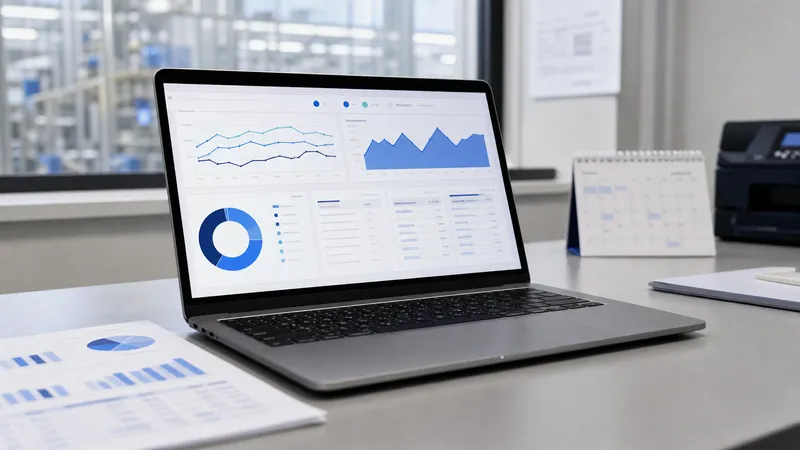
Instead of assembling records from multiple sources, the operator opens the system, filters by date range and location, and exports a report. The report includes the time-stamped readings, the threshold breaches, the alerts that were sent, who acknowledged them, and the corrective actions that were logged against them. The data is the same data the system has been collecting in the background, every minute, since the day it was installed. There is no transcription step, and no opportunity for the act of preparing for the audit to introduce errors.
The reports also tend to look the same every time. That consistency matters more than it sounds. Inspectors who see organized, professionally formatted records generally ask fewer follow-up questions about the records themselves, and the conversation moves on to the parts that actually matter, like the controls behind the readings.
What good compliance reporting includes
Not every report from a monitoring system is useful for compliance. A report that shows current values, or a chart of the last seven days, is fine for operations but does not stand up as an audit record. The reports that hold up tend to share the same characteristics.
Timestamped readings at the right interval. Every reading carries the date, time, sensor identifier, and value. The interval matches the risk in your Preventive Control Plan. A walk-in cooler holding finished product generally needs more frequent readings than an ambient storage area for shelf-stable inventory. The report should make the interval obvious without the inspector having to ask.
Threshold breaches with start and end times. When a reading moves outside the limits, the report should show when the breach began, how long it lasted, the peak excursion, and when the reading returned to range. A list of out-of-spec readings without context is harder to interpret than a clean breach record with a clear duration.
Alert history with acknowledgements. For each alert the system sent, the report should show who received it, who acknowledged it, and how long it took. An acknowledgement record is what ties the alert to a human response. Without it, the alert history is just a list of events.
Corrective action records linked to deviations. Every excursion that warranted action should have an associated record describing what was observed, what was done with affected product, the root cause investigation, and the steps taken to prevent recurrence. Linking the corrective action to the original deviation, by timestamp and sensor, is what turns a list of events into a documented response.
Calibration and system status logs. The report should make it possible to confirm that the instruments producing the data were calibrated and operating during the period being reviewed. A continuous gap in data is just as relevant as an out-of-spec reading, and the report should not hide it.
Exports that survive on their own. A PDF or CSV that is complete, attributable, and readable without a live login is what most inspectors and customers actually want. If a record can only be produced by giving the inspector access to a live dashboard, the record is harder to retain and share through normal records management.
The audit-day difference
The practical difference shows up in the room with the inspector. When records are organized and produced from a single system, the conversation tends to focus on the underlying controls rather than the documents.
The inspector asks for the temperature record for cooler three for a specific week, and the operator pulls it up in under a minute. The breaches are visible and the corrective actions are attached. The inspector moves on to ask about how the corrective action procedure is implemented, which is a question about the operation rather than a question about the records. The records side of the inspection contracts, and the time is spent on the parts of the program that actually need attention.
Inspectors are not adversaries, and they generally appreciate operations that have their records together. A facility that can produce consistent, professional reports on demand is a facility that is easier to inspect, and that can make the records review faster.
What automation does not replace
It is worth being clear about what automated reporting is not. It is not a substitute for any of the underlying control activities a compliance program is built on.
The hazard analysis still has to be done. The Preventive Control Plan still has to be written, reviewed, signed, and updated when the operation changes. The corrective action procedure still has to be defined, with the steps staff actually take when something goes wrong. Verification activities, like calibration, record reviews, and internal audits, still have to happen on the schedule the plan defines. Staff still have to be trained, and able to describe in their own words what they do when an alert comes in at 2 a.m.
What automation removes is the records management overhead, which is the part that consumes time without improving food safety. Manual logging across shifts, weekends, and holidays is genuinely hard to maintain at full coverage for two consecutive years. Automated reporting removes that burden, but only for the records themselves. The compliance program is still the program, and the people running it are still the people running it.
A useful place to start
If your operation is currently in the paper-binders-and-spreadsheets pattern, the move to automated reporting is best done in stages.
Start with one critical control point, usually the cooler or storage area that carries the most product or the highest risk. Install continuous monitoring, configure the thresholds to match your PCP, and run the reporting alongside the existing manual logs for a few months. Confirm that the reports include everything an inspector would expect, and that the operations team is using the alerts as the trigger for the corrective action procedure already in the plan.
Once that first control point is working, expand to the rest of the facility, then to other sites if you have them. Within a year, the records portion of the audit prep is generally a non-event, and the team can spend the week before an inspection on the operational side of the program, which is where the time was supposed to go in the first place.
The audit will still happen, and it should. What changes is the cost of being ready for it.
Storage Sentry is a wireless monitoring platform purpose-built for Canadian agricultural operations. It generates continuous, timestamped temperature and humidity records, logs alerts and acknowledgements, and produces exportable compliance reports, helping support the records and reporting side of an audit or inspection. Learn how Storage Sentry can help.
References
-
Canadian Food Inspection Agency. "Preventive control plan for food businesses: Record keeping." inspection.canada.ca
-
Canadian Food Inspection Agency. "Regulatory requirements: Preventive control plan for food businesses." inspection.canada.ca
-
Canadian Food Inspection Agency. "Understanding the Safe Food for Canadians Regulations: A handbook for food businesses." inspection.canada.ca
-
Canadian Food Inspection Agency. "Inspection process for food businesses." inspection.canada.ca