SFCR Temperature Monitoring Requirements for Food Businesses
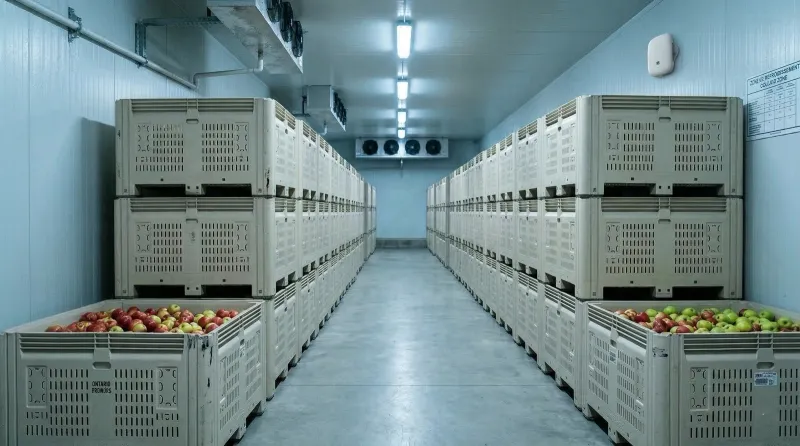
If you run a food business in Canada and you store, process, or ship anything temperature-sensitive, the Safe Food for Canadians Regulations probably apply to you. And if temperature is one of the controls your operation relies on to keep food safe, you need a defensible way to monitor it and prove those controls are working.
The challenge is that the SFCR is largely outcome-based. It tells you the safety result you need to achieve, but often leaves the method up to you. That flexibility is useful, but it also means a lot of food businesses are not entirely sure whether their current approach is good enough.
This article breaks down what the regulations actually require, where most operations fall short, and what you can do to close the gap. For the records side of the same problem, see two years of SFCR records, automated compliance reporting, and preventive control plans that stand up to CFIA inspection.
Note: This article is a practical overview, not legal advice. SFCR obligations vary by food, activity, and trade model. Consult the CFIA or a qualified food safety professional for guidance specific to your operation.
A quick overview of the SFCR
The Safe Food for Canadians Regulations came into force on January 15, 2019, with some requirements phased in over the following years depending on the type of food, business activity, and business size. They consolidated a patchwork of older food safety rules into one framework, aligning Canada's approach with internationally recognized food safety principles and the standards of key trading partners including the United States, the European Union, and Australia.
The regulations are enforced by the Canadian Food Inspection Agency (CFIA) and generally apply to businesses that import food, export food, or trade food across provincial or territorial borders. That covers manufacturers, processors, distributors, packers, and growers.
At the centre of the SFCR is the Preventive Control Plan (PCP). For many regulated food businesses, the SFCR requires a written PCP that identifies the biological, chemical, and physical hazards that could affect the safety of your food, and describes the control measures, monitoring, corrective actions, verification, and records used to manage them. (Not every business needs a written PCP. More on that below.)
Temperature control, for most food operations, is one of those critical measures.
What the SFCR requires for temperature monitoring
The SFCR is what the CFIA calls "outcome-based." Rather than giving you a specific schedule or a list of exact temperatures to hit, the regulations describe the result you need to achieve: food must be stored, handled, and transported under conditions that prevent contamination and maintain safety.
In practice, that means your PCP needs to include the following when it comes to temperature:
Identified critical control points. You need to determine where in your operation temperature matters most. That could be a walk-in cooler, a blast freezer, a wash line, a shipping dock, or all of the above.
Critical limits. For each of those control points, you need to define the acceptable temperature range. These limits should be based on your hazard analysis and the specific food products you handle.
Monitoring procedures. You need to describe how temperature will be measured, how often, and by whom. The frequency has to be sufficient to give you confidence that conditions are staying within your critical limits.
Corrective actions. When a reading falls outside the acceptable range, your PCP needs to describe what happens next. Who gets notified? What steps are taken to protect the food? How is the issue resolved?
Records. Your monitoring activities, any deviations from critical limits, and the corrective actions taken all need to be documented. Records must be legible, accurate, and must reflect what actually happened. The SFCR requires PCP records to be retained for a minimum of two years, or three years for shelf-stable low-acid foods in hermetically sealed containers.
That last point is the one that catches a lot of operations off guard.
The record-keeping requirement is where most businesses struggle
Maintaining complete temperature records for two years is a serious commitment, especially for operations that rely on manual logging. That means clipboards, paper binders, or spreadsheets maintained without gaps for 730 consecutive days.
The CFIA is clear about what they expect: records need to be legible, permanent, and must accurately reflect the actual event or condition. A reading that was filled in after the fact does not meet that standard. Neither does a log sheet with blanks where the overnight or weekend readings should be.
Most food businesses are not skipping records on purpose. The gaps happen because someone was busy, or away, or forgot. Over two years, those small misses accumulate into a documentation problem that is difficult to fix retroactively.
During an inspection or investigation, your monitoring records may be reviewed to assess whether your controls were implemented and effective. And if a food safety incident leads to a recall investigation, your monitoring records become your primary evidence that your facility was operating safely. Incomplete records can create both a compliance problem and an evidentiary problem when something goes wrong.
Monitoring vs. verification: an important distinction
The SFCR treats monitoring and verification as two separate activities, and your PCP needs to address both.
Monitoring is the routine measurement of conditions at each critical control point. For temperature, this means taking and recording readings at the intervals your PCP defines.
Verification is the process of confirming that the whole system is working as intended. This includes things like thermometer calibration, reviewing monitoring records for completeness, and checking that corrective actions are actually being carried out when deviations occur.
Both need to be documented. Both are subject to the two-year retention requirement. And both may be assessed during a CFIA inspection.
Who needs to comply
Not every food business in Canada is required to have a written PCP, but the threshold is lower than many people assume.
Generally, you need a PCP if you hold a licence to manufacture, process, treat, preserve, grade, package, or label food for interprovincial trade or export. You also need one if you grow or harvest fresh fruits or vegetables for interprovincial trade, or if you slaughter food animals.
There is a limited written-PCP exception for some businesses with $100,000 or less in gross annual food sales, but it does not apply across all foods and activities. Businesses dealing in meat, fish, dairy, eggs, and certain processed products may still require a written PCP regardless of size. Even where the written-PCP exception applies, the business is still required to meet the preventive control requirements themselves. In other words, you still need to have temperature controls in place, even if you do not have to write them into a formal plan.
The CFIA offers a PCP interactive tool on their website that can help you determine whether your specific operation requires a plan.
Common gaps and how to fix them
Based on the CFIA's own guidance and the structure of the regulations, here are the areas where food businesses most commonly fall short on temperature monitoring.
Monitoring frequency that does not match the risk. If your PCP says you will check temperatures every four hours but the food you store could become unsafe within two hours of a failure, your monitoring frequency is not adequate. The interval needs to be based on the actual risk, not on convenience.
Missing overnight and weekend records. Temperature does not stop mattering when nobody is on site. A cooler that fails on a Friday night and is not discovered until Monday morning is one of the most common and most expensive failure scenarios in food storage. Your monitoring approach needs to cover these periods.
No documented corrective actions. Having a temperature deviation is not, by itself, a compliance failure. Failing to respond to it and document that response is. Your PCP should describe what happens when a reading is out of range, and your records should show that those steps were followed.
Records that would not survive an audit. Handwritten logs that are partially illegible, binders with missing pages, or spreadsheets with formula errors are all liabilities. If a CFIA inspector cannot read and trust your records, the records are not doing their job.
No system for verification. Many operations monitor diligently but never step back to verify the system itself. When was the last time your thermometers were calibrated? When did someone review a full month of records for completeness? Verification is the quality check on your monitoring, and the SFCR requires it.
The case for automated monitoring
None of the SFCR requirements specify that you must use automated sensors. Manual monitoring, done properly, is fully compliant.
The challenge is doing it properly, every day, every shift, every weekend, for two straight years.
Automated monitoring systems use sensors that take readings continuously and log them digitally with timestamps. When a reading goes out of range, the system sends an alert by text or email immediately, whether it is the middle of a shift or the middle of the night. Over time, these systems generate a complete, searchable, exportable record that covers every minute of every day.
For operations that have struggled to maintain complete manual records, or that have experienced losses from overnight equipment failures, automated monitoring eliminates the two biggest risks: the gap in the record, and the failure nobody caught in time.
The investment varies depending on the size of the facility and the number of control points, but for most operations, the cost of a monitoring system is a fraction of what a single spoilage event or failed audit would cost.
Where to go from here
If you are not sure whether your temperature monitoring is meeting SFCR requirements, start with these three steps.
Review your PCP. Make sure every critical temperature control point is identified, with documented limits, monitoring frequencies, corrective actions, and verification procedures.
Audit your records. Go back six months, or a year if you can, and look for gaps, missing corrective actions, or illegible entries. Those are the things an inspector will notice.
Assess your capacity. Ask honestly whether your current approach can maintain complete, unbroken records for two full years. If the answer is no, it may be time to look at a system that can handle it for you.
The SFCR put the responsibility for food safety squarely on the business. The regulations reward operations that can demonstrate, with evidence, that their controls work. Temperature monitoring is one of the most fundamental of those controls, and getting it right protects your product, your customers, and your business.
References
-
Canadian Food Inspection Agency. "Preventive control plan for food businesses: Record keeping." inspection.canada.ca
-
Canadian Food Inspection Agency. "Understanding the Safe Food for Canadians Regulations: A handbook for food businesses." inspection.canada.ca
-
Canadian Food Inspection Agency. "Regulatory requirements: Preventive controls for food businesses." inspection.canada.ca
-
Canadian Food Inspection Agency. "Preventive controls and preventive control plan for food businesses." inspection.canada.ca
-
Canadian Food Inspection Agency. "Toolkit for food businesses new to the Safe Food for Canadians Regulations." inspection.canada.ca
-
Canadian Food Inspection Agency. "Fact sheet: Outcome-based regulations under the Safe Food for Canadians Regulations." inspection.canada.ca
-
Canadian Food Inspection Agency. "Regulatory requirements: Preventive control plan for food businesses." inspection.canada.ca
-
Canadian Federation of Independent Business. "Q&A: Is your business compliant with CFIA's new Safe Food for Canadians Regulations?" cfib-fcei.ca